

Recent Posts
- Studio su Hericium e Calprotectina
 28 September 2026
 - Cronobiologia: l’arte di vivere secondo i nostri ritmi biologici
 7 May 2026
 - Adattogeni: azione pleiotropica e normalizzante
 31 March 2026

Molecular Biologist, B.Sc.Genetic, Functional and Integrative Medicine, Mycotherapy expert. Adjunct Prof. Milan University, “Integrative Medicine Research Group” (IMRG) scientific commitee member, AFIM Health Academy (Geneve) scientific committee member, and teacher IMN (Natural Medicine Institute) and ATNO (Academy for Nutritional Therapy in Oncology) (CNR Bologna)
L’azione degli adattogeni non va intesa con il modello classico “una molecola = un effetto”. La loro attività sia multitarget, cioè distribuita su più geni, più vie di segnale e più reti biologiche; da qui deriverebbe la loro azione pleiotropica, cioè la capacità di influenzare contemporaneamente numerose “aree”, quali stress, infiammazione, metabolismo, sistema neuroendocrino e immunità.
Panossian (autore chiave per lo studio dell’adattogenesi) ed Efferth (autore che ha rivalutato in chiave moderna l’azione adattogenica) cercano di dare una base biologica al concetto di adattogeno.
Si tratta di sostanze capaci di aumentare adattabilità, sopravvivenza e resilienza durante stress e invecchiamento, attivando vie intracellulari ed extracellulari dei sistemi di difesa dell’organismo, in particolare il complesso neuroendocrino-immunitario. Oltre alle classiche piante quali Panax ginseng, Eleutherococcus senticosus, Rhodiola rosea, Withania somnifera, Schisandra chinensis, i FUNGHI MEDICINALI sono tra i più potenti adattogeni.
Gli adattogeni modificano l’espressione genica: attivano in modo potente le adaptive stress response signaling pathways (ASRSPs), cioè le vie di risposta adattativa allo stress. In altre parole, non si limitano a “spingere” una funzione, ma rimodulano il programma cellulare verso il recupero dell’equilibrio (omeostasi). È questa la ragione della loro azione apparentemente ampia e “aspecifica”.
Nelle malattie complesse non basta più guardare il singolo bersaglio; servono strumenti che leggano insieme genomica, trascrittomica, proteomica e metabolomica. L’idea è che i fitocomplessi ad azione adattogena, agiscano su una rete di interazioni e non su un solo nodo.
Dal punto di vista meccanicistico, le vie di segnale adattative più studiate sono
L’effetto può essere interpretato come una preparazione della cellula e del sistema a rispondere meglio allo stress.
Schema concettuale: l’adattogeno agisce sui geni, questi attivano vie di risposta adattativa e reti molecolari, che poi modificano processi biologici, funzioni fisiologiche e infine le attività farmacologiche osservate clinicamente. È il ponte tra “meccanismo specifico” e “azione non specifica”. In sostanza: l’azione è specifica a livello molecolare, ma gli effetti clinici diventano ampi perché quella specificità si estende dentro una rete biologica e la regola.
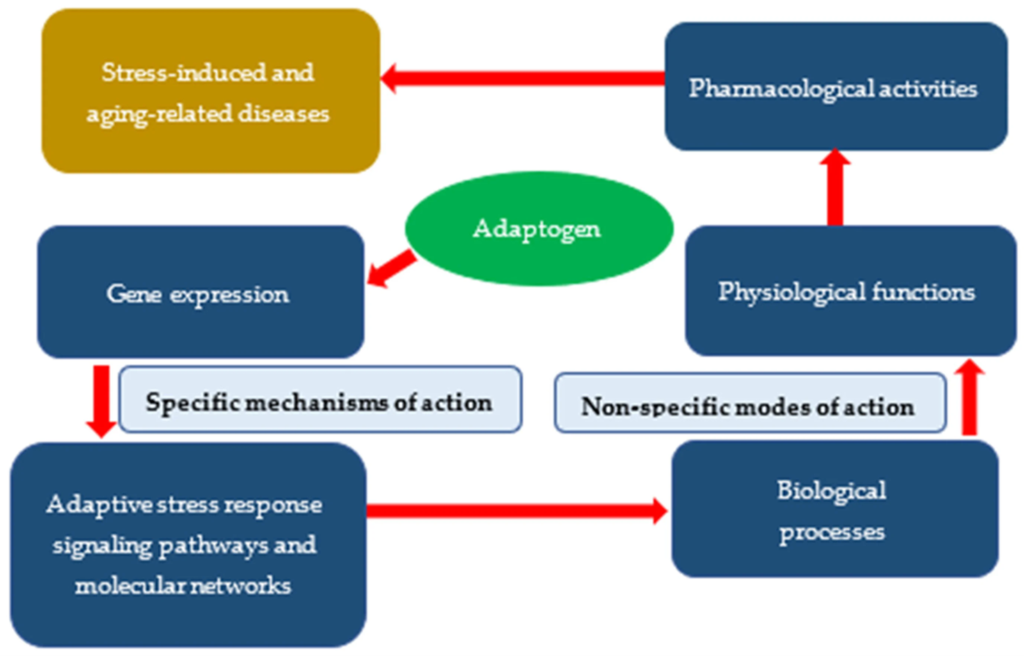
Effetti attesi con l’uso degli adattogeni.
per i funghi (funghi interi e potenziati) si aggiunge
In pratica effetto pleiotropico, che non indica un effetto “vago e non spiegabile”, ma è la conseguenza del fatto che un adattogeno regola geni e meccanismi che a loro volta influenzano più reti biologiche di regolazione (PNEI + MM = PsicoNeuroEndocrinoImmunologia + Microbiota e Metabolismo)
Per questo la stessa sostanza può mostrare contemporaneamente effetti su infiammazione, metabolismo, disturbi neurodegenerativi, metabolismo energetico, immunità e può essere utile nella medicina integrativa a sostegno di malattie anche gravi (le terapie farmacologiche intense sono un forte fattore di stress per l’organismo).
Un punto interessante da notare è che un “estratto” agisce in modo diverso dal composto in toto (fitocomplesso, micocomplesso). Un composto purificato (estratto) ha un profilo trascrittomico diverso rispetto al complesso di tutte le molecole bioattive contenute nella sostanza in toto.
Un estratto standardizzato ha un effetto più “farmacologico”. Anche se vi è qualche evidenza clinica (per le piante in particolare, non per i funghi) che specifiche molecole, quali ad esempio il ginsenoside Rg1del Ginseng, il salidroside della Rhodiola rosea e altre molecole possono avere un effetto in parte adattogenico, ma orientato. il fitocomplesso/micocomplesso dimostra però sempre di aumentare resilienza e adattamento biologico.
Sul fronte oncologico, gli adattogeno possono attivare una rete molecolare che migliora vie di segnale quali AMPK, mTOR, glucocorticoid receptor signaling, estrogen receptor signaling, NRF2-mediated oxidative stress response, WNT/β-catenin, ecc. che favorisce e potenzia la risposta cellulare di recupero dalla malattia. si tratta di un effetto di potenziamento delle capacità del corpo di difendersi e non di un’azione farmacologica diretta alla malattia: è l’organismo che viene potenziato per “arginare e contrastare” la malattia.
La forza degli adattogeni è il potenziamento dell’organismo in un concetto biologico integrato e non un intervento famacologico diretto.
Reference
Panossian A, Efferth T. Network pharmacology of adaptogens in the assessment of their pleiotropic therapeutic activity. Pharmaceuticals. 2022 Aug 25;15(9):1051.